
Ignatian Women Who Inspire Us (2026)

(Material prepared and adapted by the Office of Ignatian Spirituality, USA East Province of the Society of Jesus.)
By Zandra Schiemann
Continuing our series from last year, this March, Women’s Month, we continue honoring three of the many Ignatian women whose leadership and service inspire us.
Their commitment to a synodal Church, the formation of Ignatian leaders, and the promotion of the Spiritual Exercises —together with their work alongside the most vulnerable and their care for our Common Home— makes them true references for our mission.
Join us in discovering their stories.
With gratitude, we close this month—when “Women’s History Month” is commemorated—and our series Ignatian Women Who Inspire Us, by presenting the story of a woman whose journey has left a mark on many communities. Leer en español.
Her testimony invites us to continue building together a more synodal, more human Church, one that is closer to the heart of God. Join us in learning about her story. There you can also find other stories that have inspired us.
This series is presented by OIS’s Ministerio Hispano Ignaciano. Click here to learn more about our Ignatian Hispanic Ministry.
Women who accompany, form, and open paths: Ignatian leadership that transforms communities. | A testimony of leadership, discernment, and accompaniment that encourages other women to walk with freedom and hope. | Interview with Ibis Centeno
With deep experience in Ignatian Spirituality, co-responsibility, and catechesis—including her years at the Jesuit Collaborative supporting Hispanic Ministry—Ibis Centeno is a voice who accompanies, forms, and opens paths for other women. In her life we discover an Ignatian woman who has made listening, discernment, and accompaniment a path of service. Her story—shaped by more than twenty years of pastoral mission, the formation of community leaders, the promotion of the Spiritual Exercises, and a decade as a foster mother to children in vulnerable situations—is a true testimony of what it means to walk with others in a Church that seeks to be increasingly synodal. This article invites us to enter her story, to let ourselves be touched by her testimony, and to recognize in her the many women who sustain, transform, and renew our communities.
-
Ibis, a woman with deep Cuban roots, inspires because she opens spaces where none existed before, empowers women who seek to serve from their faith, and accompanies processes of healing and spiritual growth with a firm tenderness and a wisdom born of experience. Her leadership reflects the essence of Ignatian spirituality: helping others discover how God is at work in their lives and encouraging them to take courageous steps forward.
For more than twenty years, Ibis Centeno has served in the Diocese of Charlotte, NC, accompanying Hispanic communities through Youth Ministry, leadership formation, and coordination of Hispanic Ministry. Her service was born from a deeply transformative spiritual experience: an Ignatian retreat where she discovered “that Jesus wanted to be my friend,” beginning a journey of conversion that shaped her entire life and helped her discover her mission.
Since then, Ibis has dedicated her life to promoting the Spiritual Exercises, accompanying retreats, workshops, and formation processes in parishes, universities, and Jesuit retreat houses. A graduate of the Magis program and a spiritual director for more than a decade, she offers the Exercises in daily life, helping many people discern, heal, and find God in the everyday.
Her leadership shows a synodal Church, where listening, discernment, and walking together are essential. She has accompanied diverse communities—including Indigenous peoples—learning to value their cultures, ways of proceeding, and language, because, as she herself says, “every community has its own culture… and we must adapt to it.”
Ibis recognizes and supports women’s leadership in the Church. She has seen how women sustain pastoral life with sacrifice, creativity, and a spirituality lived out in practice: “in almost every ministry meeting, 80% of those present are women… they are the ones moving things forward, not only in ministry but also in their families.” Her mission has been to open spaces, form leaders, and accompany women who, despite encountering closed doors, continue responding with generosity and faith.
A deeply human chapter of her life is her experience as a foster mother for more than ten years, welcoming 34 children in vulnerable situations. What began as a job search became a school of compassion: “I learned that I wasn’t saving anyone… I was offering a safe place.” That experience shaped her understanding of care, human dignity, and the mission of healing wounds—values that today are part of her pastoral leadership.
From that profoundly human experience, Ibis’s story becomes even clearer: a woman who has learned to discern, to listen, and to respond; an Ignatian woman who inspires because she opens paths where others see limits, forms leaders where others see need, and accompanies with a faith that becomes life, community, and service. Her journey—marked by the promotion of the Spiritual Exercises, the formation of women leaders, the accompaniment of diverse communities, and a decade as a foster mother—shows a lived spirituality that transforms realities.
Ibis reminds us that Ignatian leadership is not imposed; it is woven with patience, cultivated through listening, and sustained by the trust that God acts in what is small, in the everyday, in what seems invisible. Her life is an invitation to keep walking together, to open spaces where others see obstacles, and to believe that when a woman rises with faith and a deep trust in God, an entire community discovers new horizons.
Women’s Leadership in a Synodal Church: When Women’s Voices Open the Way - Interview with Dr. María del Pilar Silveira
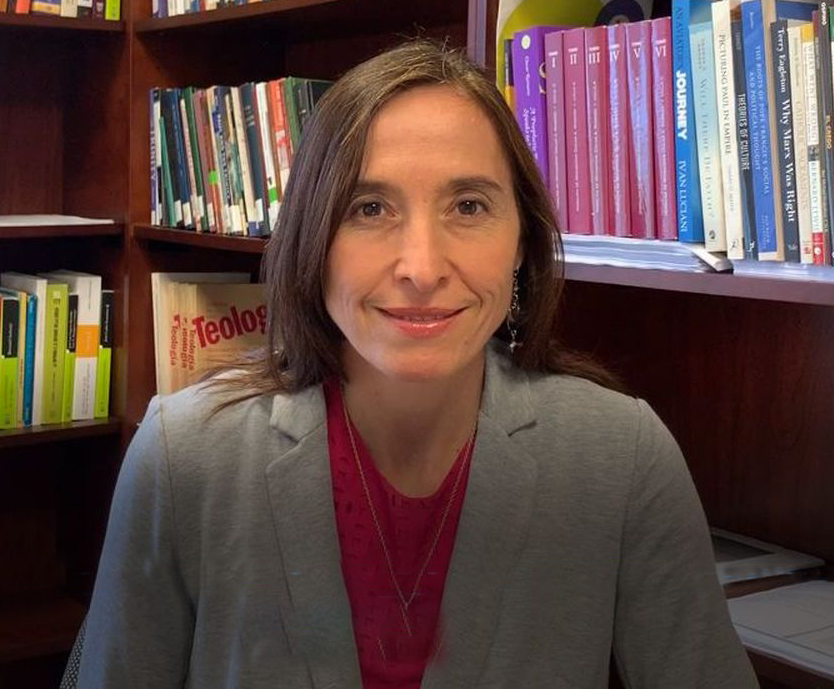
María del Pilar Silveira is one of those women whose life becomes a living testimony of what it means to be formed, accompanied, and transformed from the heart of Ignatian spirituality. A Uruguayan theologian with deep pastoral sensitivity, Pilar has dedicated decades to cultivating leaders across continents, integrating faith, discernment, and social commitment.
Her academic trajectory—from the Pontificia Universidad Javeriana in Bogotá to the Pontifical Gregorian University in Rome — is complemented by extensive experience in community formation, social leadership, and spiritual accompaniment in places such as Venezuela and the United States.
A prolific author and facilitator of group processes, Pilar invites us—through her life and her words—to look at mission from the peripheries, to listen to the voices of women, and to allow ourselves to be transformed by a leadership born from an encounter with Jesus. Among her most significant works is Religiosidad Popular con Rostro Femenino y Sinodalidad, a book that shows how popular religiosity sustains a more vibrant, participatory, and synodal Church.
-
In today’s Church—marked by deep searches for renewal, justice, and participation—women’s leadership emerges not as something new, but as a long‑standing reality only now being fully recognized.
The life and ministry of Dr. María del Pilar Silveira, a Uruguayan theologian, missionary, and formator of leaders in Latin America and the United States, offers a privileged window into how Ignatian spirituality empowers women to inhabit spaces of discernment, co‑responsibility, and participation in the evangelizing mission of the Church.
Her personal story reveals how God weaves leadership from what is small, ordinary, and profoundly human.
Roots That Shape a Calling
From her rural roots in Uruguay—where her faith was forged “in the experience of people who live in the countryside, in a faith passed on by my grandmother and my mother”—to her work with young people, vulnerable communities, and migrant women, María del Pilar Silveira has embodied a leadership born from an encounter with God and expressed in concrete service.
Pilar recognizes that everything began with a simple and profound spirituality: from a young age she nurtured her faith through praying the Rosary and contemplating images of Mary.
Her childhood unfolded in a rural school she reached after walking several kilometers with her siblings, waiting for a bus or a neighbor to give them a ride. Later, at eight years old, she entered a Salesian school that deeply shaped her spirituality and her understanding of service.
There she discovered her love for young people and her desire to give herself to others. At twelve, she began participating in missions, accompanying small communities, young people, and children.
As she grew older and moved to Montevideo, she began studying social work for three years and then one year of law. Yet something within her continued to stir. She did not see herself solely forming a family; she felt a broader call, a deep desire “to do something great for others, especially for women.”
That call became clear when, as a university student, she was invited to a retreat. There she experienced a profound encounter with God that marked her life and her calling forever.
Pilar’s journey not only reveals her own call but also reflects what so many women have lived quietly in the Church for decades.
A Leadership That Has Always Been There, but Is Now Becoming Visible
Pilar expresses it clearly: women’s leadership in the Church is not a trend or a recent concession. It has always been present, though often little recognized. Today, thanks to the synodal process promoted by Pope Francis and embraced by the Society of Jesus, new spaces are opening to acknowledge and strengthen it.
For her, the key point is clear: women’s voices must carry equal weight in processes of discernment and decision‑making.
It is not only about participating in pastoral action—where women already sustain much of ecclesial life—but about being heard and considered in shaping the mission. Synodality, in this sense, is not a slogan but a change of mindset and structures.
Empowerment Through Ignatian Spirituality
Throughout her pastoral ministry, Pilar has accompanied political, civic, and spiritual formation processes for women in Venezuela, the United States, and other countries. She has witnessed how Ignatian spirituality—with its emphasis on interior freedom, discernment, and transformative action—becomes a powerful tool for women to recognize their dignity, their voice, and their capacity for impact.
She summarizes it this way: “We first need to value ourselves… to reconcile with our feminine identity, with our contribution, with who we are and what we are worth as women.”
This empowerment is not individualistic. It is born from an experience of God and oriented toward service: accompanying grieving mothers, supporting migrants, organizing networks of solidarity, promoting community projects, and advocating for civic rights and responsibilities. It is a leadership that transforms realities from below, from the everyday, from what hurts.
Challenges That Still Persist
Pilar acknowledges that many women still hesitate to make their voices heard. Cultural roots of patriarchy, the idealization of the priest as the ultimate authority, and the lack of real spaces for co‑responsibility remain obstacles.
But she also notes that transformation begins in personal awareness: recognizing the freedom that baptism gives us, assuming the responsibility to discern, no longer delegating one’s own voice, walking together without rivalry, and strengthening community.
Synodality requires deep conversion—spiritual, cultural, and structural.
Dreaming of a Church Where Women and Men Lead Together
Pilar’s dream is clear: a Church where women and men share responsibilities, authority, and mission; where structures are reviewed to open real spaces; where pastoral and community experience inspires new forms of organization.
It is not only about debating women’s access to the priesthood—a topic she recognizes as complex and still distant—but about acknowledging that there is a wide apostolic field where women are already leading with creativity, competence, responsibility, and spirituality.
Successful experiences in schools, parishes, social centers, Indigenous communities, and frontier projects show that this path is both possible and fruitful.
A Leadership Born from an Encounter with Jesus
For Pilar, Ignatian leadership—especially women’s leadership—can be summed up in a question that has accompanied her throughout her life:
“How can I love and serve more?”
That is the heart of the mission: meeting Jesus each day in prayer, listening to his Word, discerning with freedom, acting with courage, walking with others, and transforming reality through compassion and justice.
Hope Has a Woman’s Face: A Prophetic Look at the Church Today. Interview with María Lía Zervino
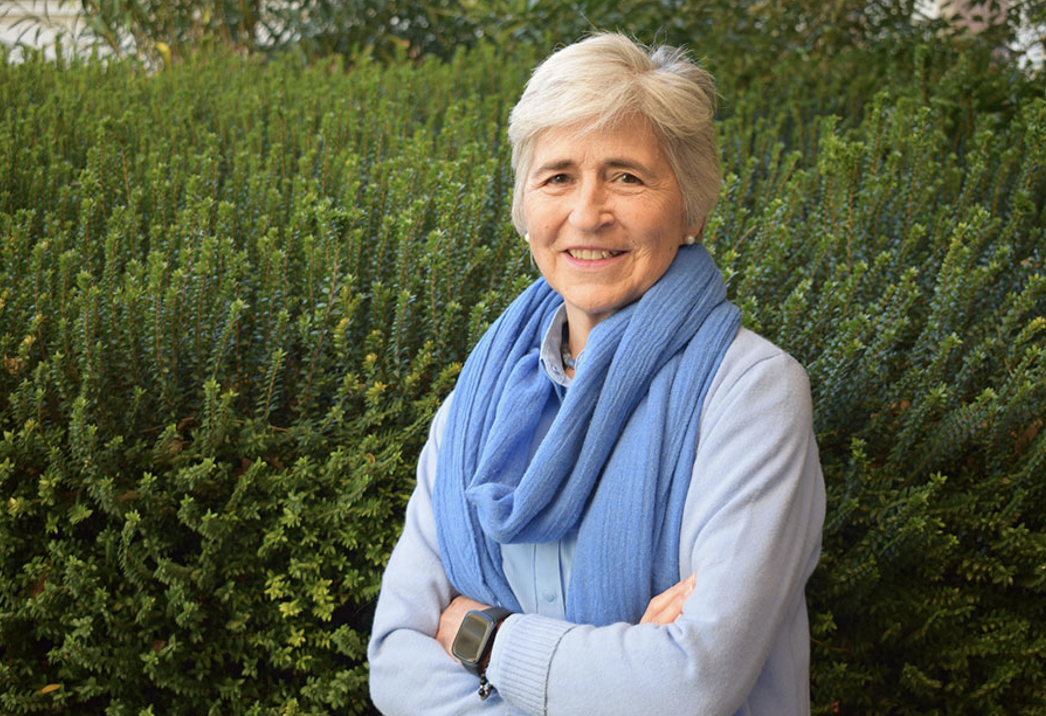
María Lía Zervino offers us a profound and hope-filled look at today’s Church. Drawing from her experience accompanying so many “invisible disciples,” she shows how women —in silence, on the peripheries, and in everyday life— sustain the mission with a beauty that recalls Mary’s presence at the foot of the cross.
With a deeply Ignatian heart, Dr. Zervino invites us to recognize, give thanks for, and amplify the voices of these women who embody the tenderness, mercy, and fidelity the Church needs to move toward true synodality. Her testimony calls us to transform our relationships and reminds us that hope has a woman’s face.
The full interview is worth reading: it is luminous, realistic, and deeply spiritual. It leaves you wanting more and eager to keep walking forward.
You can read it in English: Hope Has a Woman’s Face: A Prophetic Look at the Church Today | Interview with María Lía Zervino and in Spanish: La esperanza tiene rostro femenino: una mirada profética sobre la Iglesia actual | Entrevista a Mar.
We invite you to keep visiting this section and discover other Ignatian women who inspire us through their ministries and their charism.